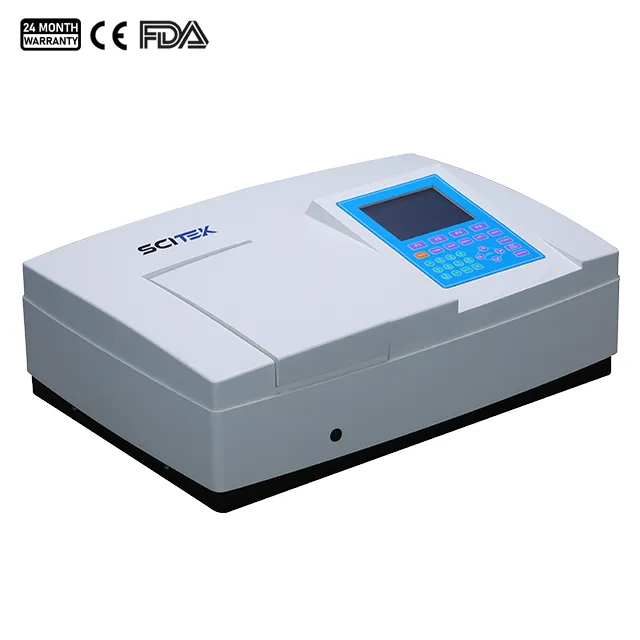
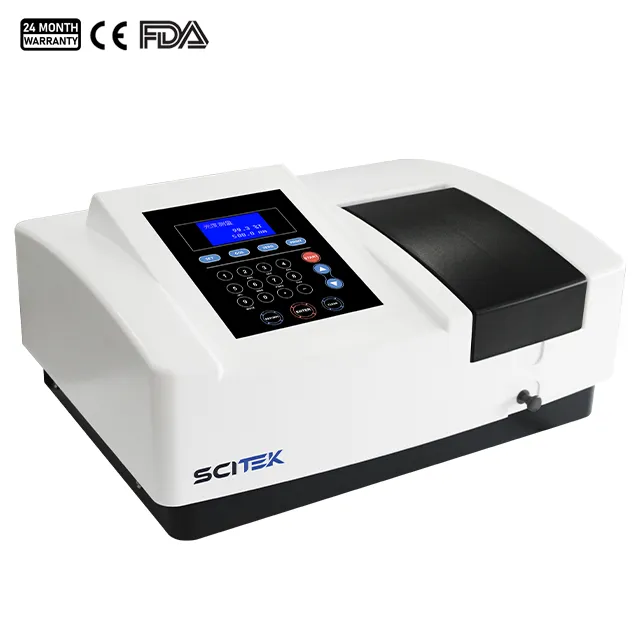
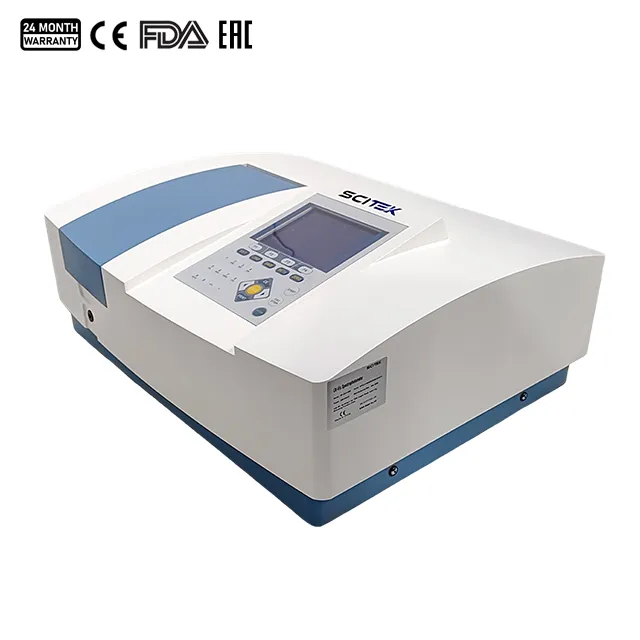
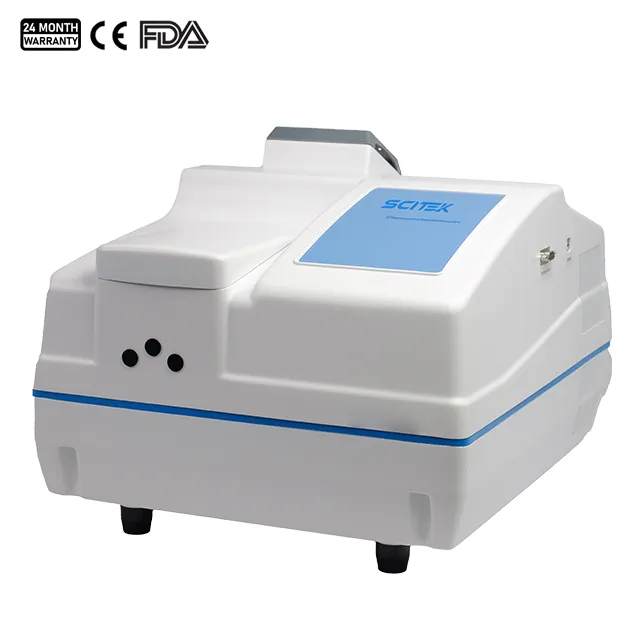
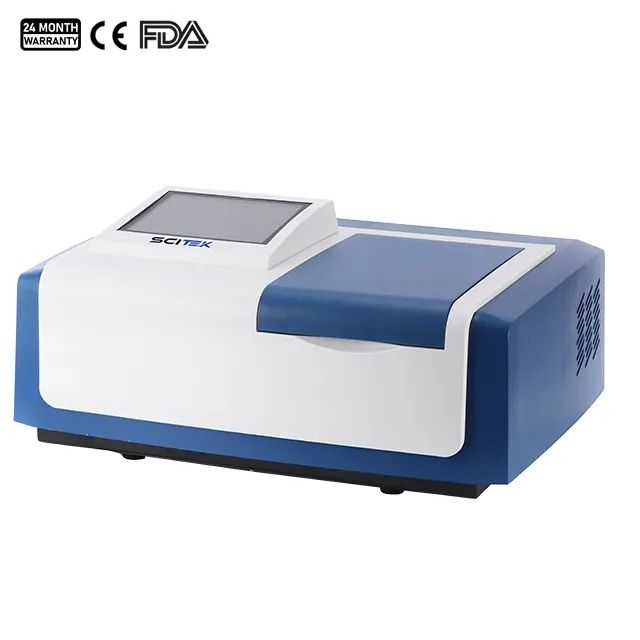
High-Precision UV-Vis & Laboratory Spectrophotometers for Research, Clinical, Industrial and Educational Applications.
Spectrophotometers are essential analytical instruments used for quantitative and qualitative analysis in laboratories, research facilities, pharmaceutical industries, environmental testing, food processing, biotechnology, and educational institutions. These systems provide accurate absorbance, transmittance, and concentration measurements across UV and visible wavelength ranges.
At DNA Dynamics, we provide state-of-the-art spectrophotometric solutions engineered with high-precision grating, absolute optical paths, and stable light source controllers. Sourced from certified diagnostic partners and designed for high accuracy and repeat run cycles, our spectrophotometers deliver standard-setting stability and reliable digital LIMS connectivity.
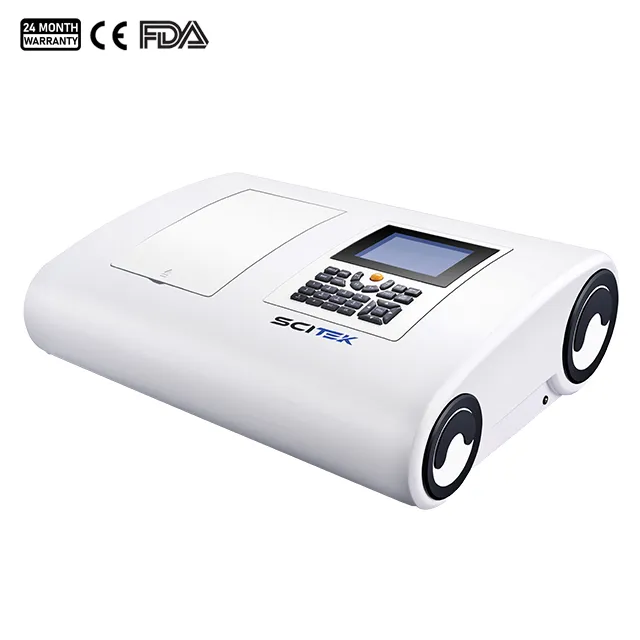
Compare our diverse range of analytical spectrophotometers, optimized with digital interfaces, wide wavelength scaling, and robust optical performance.
Advanced UV-Vis spectrophotometers designed for accurate absorbance and transmittance measurements in research, pharmaceutical, clinical, and industrial laboratories.
Compact and economical visible spectrophotometers ideal for routine laboratory analysis and educational applications.
High-performance double beam systems offering superior stability and measurement precision for advanced laboratory operations.
Microvolume spectrophotometers for DNA, RNA, and protein analysis using ultra-low sample volumes.
Portable and lightweight spectrophotometers designed for on-site and field-based analytical testing.
Our analytical spectrophotometers are calibrated under rigorous standard certifications to guarantee precision results.
Precision optical paths and stable diffraction gratings minimize stray light and guarantee absolute measurement accuracy.
High-speed microprocessors compute wavelength scans and sample concentration kinetics dynamically in under 5 seconds.
State-of-the-art Deuterium and Tungsten-Halogen light sources guarantee full range spectral stability and low noise.
Large color touch-screens display absorbance curves and calibration points with easy multi-user profiles.
Low-power microcomputer boards and standby lighting controls decrease energy draw and temperature drift.
Robust sealed optical compartments protect internal optical gratings and sensors from laboratory chemical vapors.